
Back to the AGI Connections Index
AGI Connections - Summer 2026
Explore AGI Federation Activities in the Latest Issue of AGI Connections
The newsletter highlights AGI news and upcoming events from across the geoscience federation. Help us share important geoscience events by contacting Geoff Camphire, AGI Communications.
In This Issue
- AGI Data Dashboard Becoming Important to Profession
- Partnership with NEEF Expands Outdoor Geoscience Learning
- Glossary of Geology Goes Digital, and Users Take Notice
- Geoscience Enterprise ARC Strengthens Community’s Future
- New from AGI
- Geoscience Event Calendar
AGI Data Dashboard Becoming Important to Profession
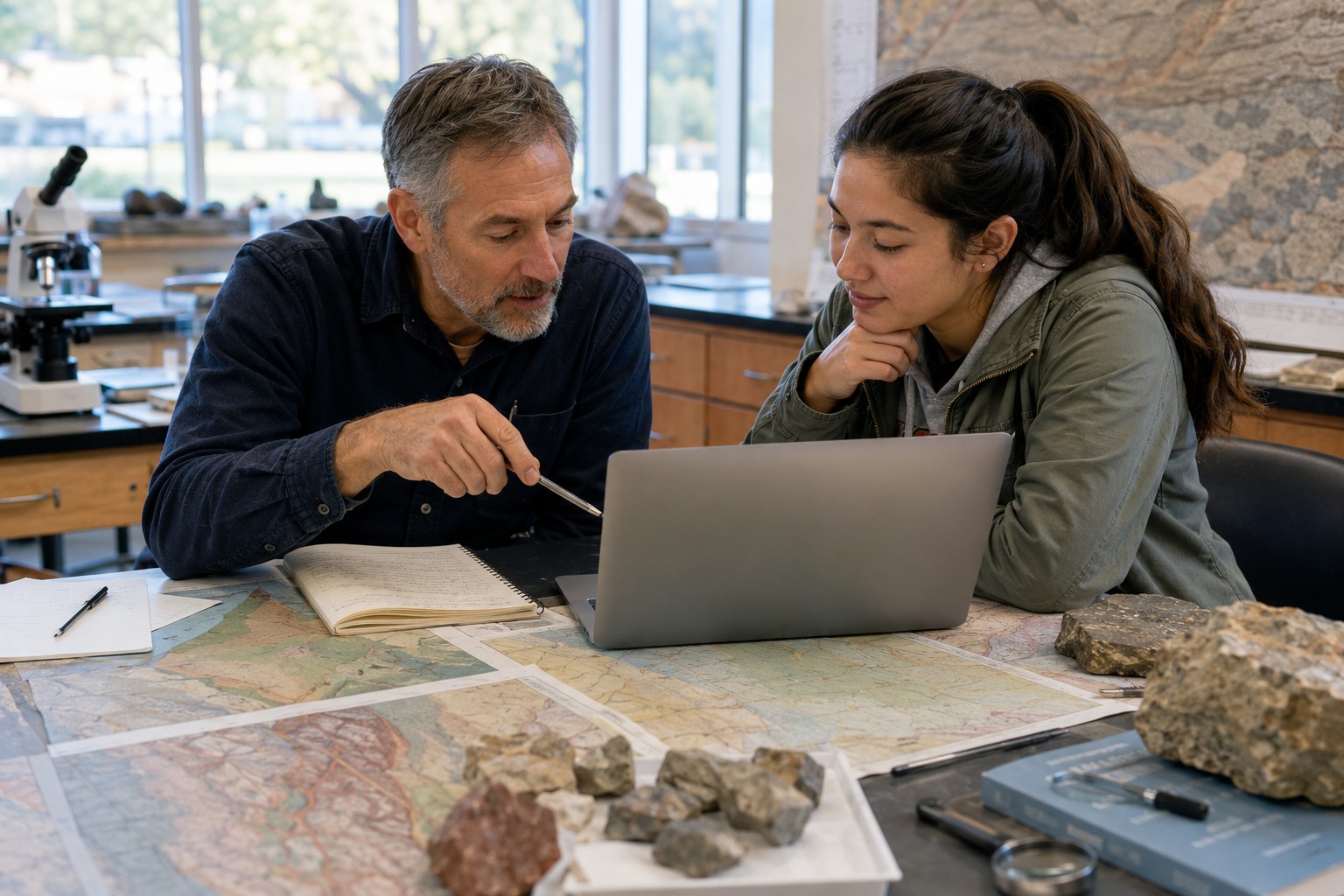
From students exploring career options to industry leaders mentoring the next generation, users across the geoscience community are turning to AGI’s Geoscience Workforce Data Dashboard for insights that help inform decisions, spark conversations, and strengthen the profession. Since 2024, AGI has provided monthly updates through the dashboard, creating a centralized hub for key metrics that track the health and evolution of the geoscience enterprise. The dashboard brings together information on employment trends, workforce demographics, academic enrollments, degree production, faculty data, and other indicators generated by AGI’s Geoscience Profession and Higher Education Program. In doing so, it helps advance career pathways and readiness for a skilled, adaptable next-generation workforce as part of AGI’s Geoscience Enterprise Rising framework.
For many users, the dashboard’s value lies not only in the data itself, but also in how it helps tell the story of geoscience. “When I speak to prospective geoscientists and K-12 students, it’s helpful to have AGI data about future opportunities,” said Gretchen Gillis, formerly President of the American Association of Petroleum Geologists and recently retired after 15 years with Aramco Americas. “A lot of people have no idea what cool geoscience jobs are out there. AGI studies help me persuade the general public that what we do is important. We all depend on clean water, clean air, energy, and Earth resources.” Throughout her career, Gillis has relied on AGI data products to better understand the profession and guide others entering the field. “AGI studies and information such as the Directory of Geoscience Departments have helped me as a mentor to university students and early-career professionals.”
For others, the dashboard reveals trends that challenge assumptions and deepen understanding of the workforce. David Bartel, a Geophysical Consultant and volunteer with the Society of Exploration Geophysicists Foundation, says the dashboard has provided valuable perspective on employment patterns within the profession. “Some of the information definitely helped further my understanding of employment in geoscience,” he said, adding for instance that he was surprised by the size of the environmental workforce.
Bartel also noted the dashboard’s ability to illustrate long-term industry cycles. Employment data shows significant fluctuations in the petroleum and mining sectors, which are currently on an upswing, he noted. The dashboard’s academic data has also resonated with his observation of changes in graduate education and international student participation. “In exploration geophysics, international students are increasingly willing to pursue graduate education outside North America, such as in Europe and Asia,” Bartel said. “At the same time, there appears to be a decline in the number of Chinese students attending U.S. universities. Dashboard data seems to support some of those trends.”
For emerging professionals, the dashboard serves as a valuable career exploration and advising tool. Emma Stolinas, who recently completed a master’s degree in Geological Sciences at Michigan State University, found the data particularly useful as she transitioned from geochemistry research into a role focused on student success and career development. “As someone working at the intersection of career development and geoscience, I’m interested in this data because it gives me a better idea of the types of occupations that professional geoscientists pursue, as well as outlooks for careers in the geosciences,” she said. “This allows me to better advise students who might be interested in careers in geoscience and expose them to career pathways that they haven’t yet considered.”
Stolinas added that the data helps broaden students’ awareness of opportunities available to them. Whether supporting workforce planning, student advising, professional mentoring, or public outreach, AGI’s Geoscience Workforce Data Dashboard is helping users better understand the profession and its future. As the geoscience enterprise continues to evolve, the dashboard remains a trusted resource for those seeking reliable, timely, and actionable information about the people who power the geosciences.
For more information, visit AGI’s Geoscience Workforce Data Dashboard. To learn more about the dashboard and similar efforts, contact AGI Geoscience Profession and Higher Education Director Christopher Keane.
Partnership with NEEF Expands Outdoor Geoscience Learning
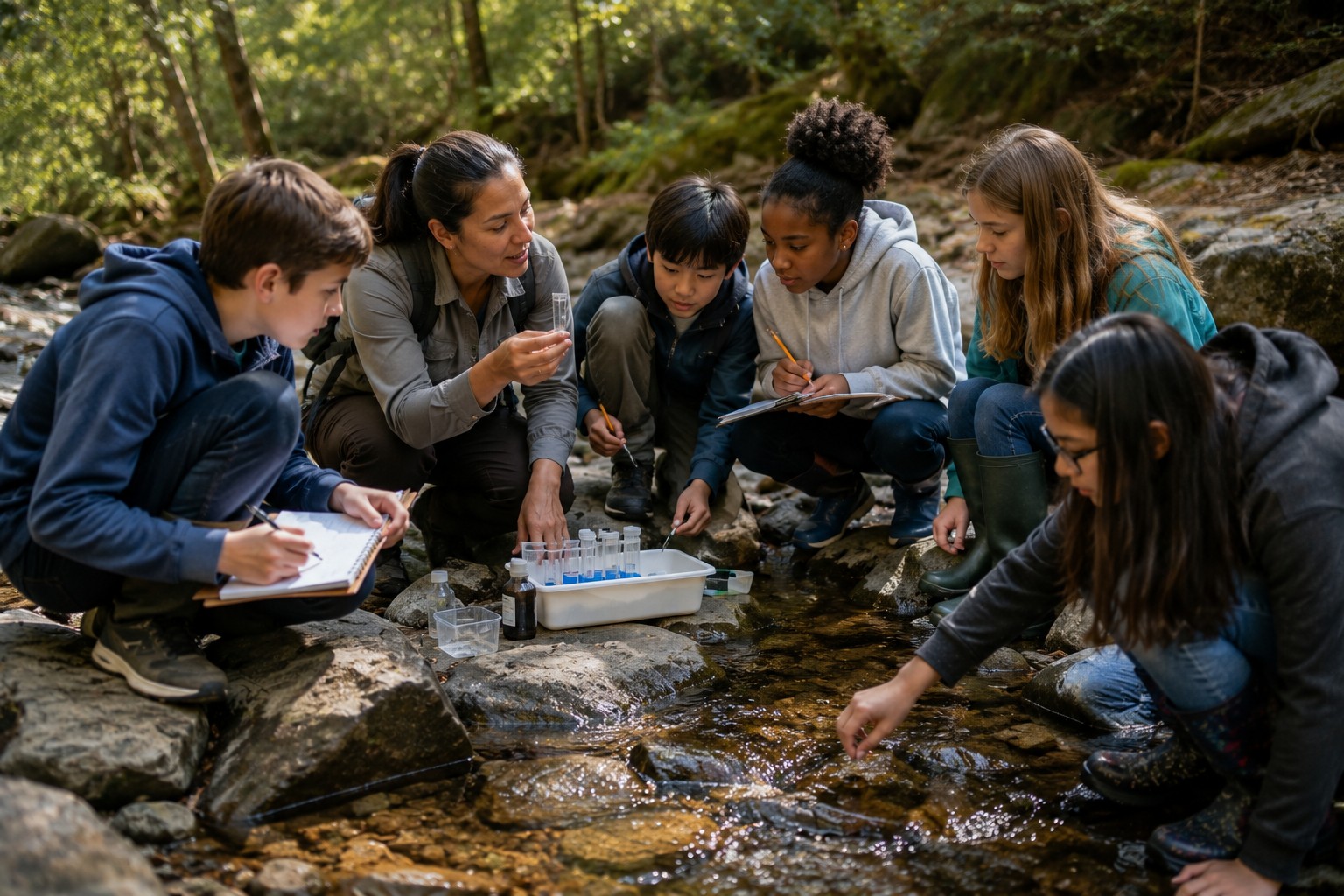
What began as a sponsorship has quickly grown into a thriving partnership that is expanding geoscience and environmental education opportunities for students, strengthening outreach efforts, and creating new connections between two national education initiatives. Last year, the National Environmental Education Foundation (NEEF) became the sponsor of No Child Left Inside (NCLI) Day, one of the signature Focus Days highlighting important themes across the geosciences during Earth Science Week, a cornerstone of AGI’s Geoscience Enterprise Rising framework. The collaboration has already produced tangible benefits for educators, students, AGI, and NEEF alike.
NCLI Day encourages students to move beyond the classroom and engage directly with Earth and environmental science through hands-on outdoor exploration and investigation. With NEEF joining as sponsor, AGI enhanced the program in several ways. The organizations collaborated to revamp the NCLI Day Guide, which now appears on a dedicated NEEF webpage celebrating the event. AGI also integrated the guide’s activities into the Earth Science Week Classroom Activities collection and added a new “No Child Left Inside” filter, making it easier for educators to locate outdoor learning resources. To amplify awareness, AGI supported the partnership through a coordinated social media campaign promoting both NCLI Day and NEEF’s educational resources.
The partnership aligns naturally with NEEF’s mission of helping people connect with the environment through meaningful learning experiences. “Outdoor geoscience activities give kids the opportunity to see and touch real rocks, observe ecosystems, and understand how landscapes shape communities,” said Sara Espinoza, President and CEO of NEEF. “That direct experience builds both scientific understanding and confidence that they can understand complex systems.” She noted that active participation helps students connect science to real-world issues in their own communities, adding that when students engage with topics such as climate change and water quality, “they’re discovering that science is relevant to where they live and that they have something to contribute.”
Espinoza praised the collaboration between the organizations, noting that AGI staff were “very helpful” throughout the process. The outreach efforts generated impressive engagement as well. According to Espinoza, AGI’s promotion of NCLI Day “was super helpful and drove over 2,500 people to the dedicated NCLI dedicated page.” Perhaps most significantly, the partnership has expanded beyond Earth Science Week itself. Following the launch of the collaboration, NEEF reinstated National Environmental Education Week (EE Week), observed annually during the week of Earth Day in April. Earth Science Week is now a partner in that initiative, creating a reciprocal relationship that extends educational impact throughout the year. As part of EE Week, NEEF highlighted AGI educational activities dealing with soils and water quality. The cross-promotion helps connect educators with high-quality classroom activities while reinforcing the shared goals of both organizations.
For Espinoza, the partnership demonstrates the power of coordinated efforts to elevate environmental education nationwide. “Both initiatives are asking the same essential question: How do we make environmental learning visible and valued?” she said. “By relaunching EE Week as a partner-driven initiative and linking it with Earth Science Week, we’re creating sustained visibility throughout the calendar where geoscience, environmental education, and outdoor learning all connect.” As AGI and NEEF continue to work together, the partnership is helping ensure that students have more opportunities to explore the natural world, engage with authentic scientific investigations, and discover the relevance of Earth and environmental science in their everyday lives.
Learn more online about No Child Left Inside Day, Earth Science Week, and additional programs of AGI Education and Outreach. To discuss how your organization and AGI can work together to support geoscience education, contact AGI Education and Outreach Director Ed Robeck.
Glossary of Geology Goes Digital, and Users Take Notice
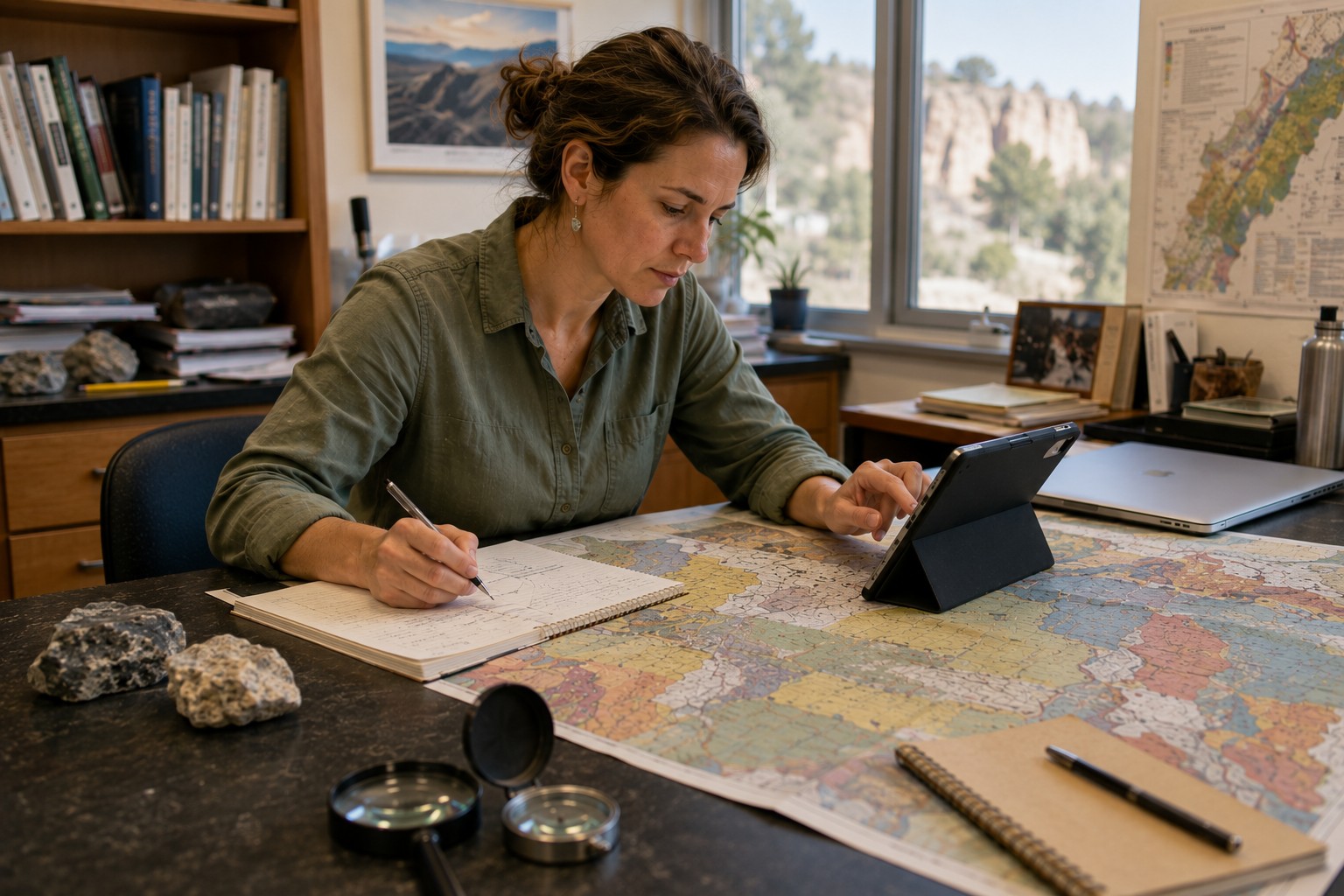
For generations of geoscientists, AGI’s Glossary of Geology has been the definitive reference for Earth science terminology. Today, its online evolution is proving that even a trusted classic can become more powerful with the right technology. AGI’s online Glossary is earning enthusiastic praise from users across disciplines, who are finding that the digital platform delivers both the authoritative content they expect and the convenience modern professionals need.
The online Glossary provides access to more than 39,000 entries from the Fifth Edition of the print publication. Beyond the 13,000 updated entries introduced in that edition, the online version has continued to evolve, with more than 1,100 additions, revisions, and deletions since publication, making it the most current version available.
The result is far more than a dictionary of geoscience terms. Users can explore the origins of terminology, discover when terms first entered the scientific vocabulary, compare closely related concepts, identify preferred terminology among synonyms, and find explanations for common abbreviations and acronyms. Many entries also include syllabification guides and valuable background information that provide context beyond a simple definition.
The platform’s robust search capabilities make navigating this extensive resource remarkably easy. Users can search by term, definition text, category, or Spanish-language equivalent. Boolean operators and a browsable word wheel help users quickly pinpoint the information they need. The online platform also introduces several capabilities that were impossible in print. Spanish-language equivalents for many entries are fully searchable and browseable, helping expand accessibility for a broader audience. Hyperlinked definitions connect related concepts, synonyms, and antonyms, allowing users to move seamlessly through interconnected terminology. Such features make the Glossary a foundational part of AGI’s efforts to advance research and innovation through its new Geoscience Enterprise Rising framework.
For professionals who rely on precise language and standardized definitions, those features can have a significant impact. Caitlin Bernier, a Geographic Information System (GIS) professional with Pangaea Geospatial, uses the Glossary extensively in support of geologic mapping projects for the Colorado Geological Survey. “I use the glossary as an authoritative source for geologic terms in the preparation of geologic maps for the Colorado Geological Survey (CGS),” Bernier said.
She explained that under the USGS GeMS database schema, glossary definitions are a required component that help non-specialists understand geologic map features. Before subscribing, she often had to assemble definitions from multiple sources. The AGI Glossary changed that. “It’s been a time saver and also adds an element of standardization to the GeMS format for pubs coming from CGS,” Bernier said. “Standardization is a significant piece of attempting to create a nationwide geologic map.”
Users also praise the platform’s design and ease of use. Consulting Archaeologist and Technical Editor Robert Gargett described his first impressions simply: “The interface is eye-catching, especially in dark mode, and best of all, it’s uncluttered.” After years of working with printed editions, Gargett found the digital experience transformative. “I was pleasantly surprised at how easy it was to find information using the search function,” he said. “Your online glossary is like the proverbial fresh air.”
The breadth of terminology has also proven valuable in his work reviewing mining engineering compliance reports. “Part of my editing life involves mining engineering compliance reports, so the inclusion of mining-related terminology will really help,” Gargett said. “An archaeologist by training, bootstrapping myself in the world of mining would’ve been much easier with the online edition.”
His overall assessment captures what many users are discovering: “It’s a big improvement over a physical book, like so many things on the web.” Whether accessed through the online subscription platform or a Kindle eBook, the Glossary continues to serve as an indispensable resource for geoscience professionals, students, educators, editors, and researchers. The Kindle edition faithfully reproduces the content and formatting of the print version while adding the searchability and portability of an eBook. As the geoscience community continues to grow and change, AGI’s Glossary remains what it has always been: the trusted authority on geoscience terminology, now more accessible, searchable, and useful than ever before.
Go online to learn more about the Glossary of Geology and additional products and programs of AGI Scholarly Information. The Glossary is available as an online subscription, via IP address, to libraries, university departments, corporations, or and other organizations; for a quote, or to inquire about site-wide licensing, please email AGI’s John Rasanen. For more information, contact AGI Director of Scholarly Information Tia Colvin.
Geoscience Enterprise ARC Strengthens Community’s Future
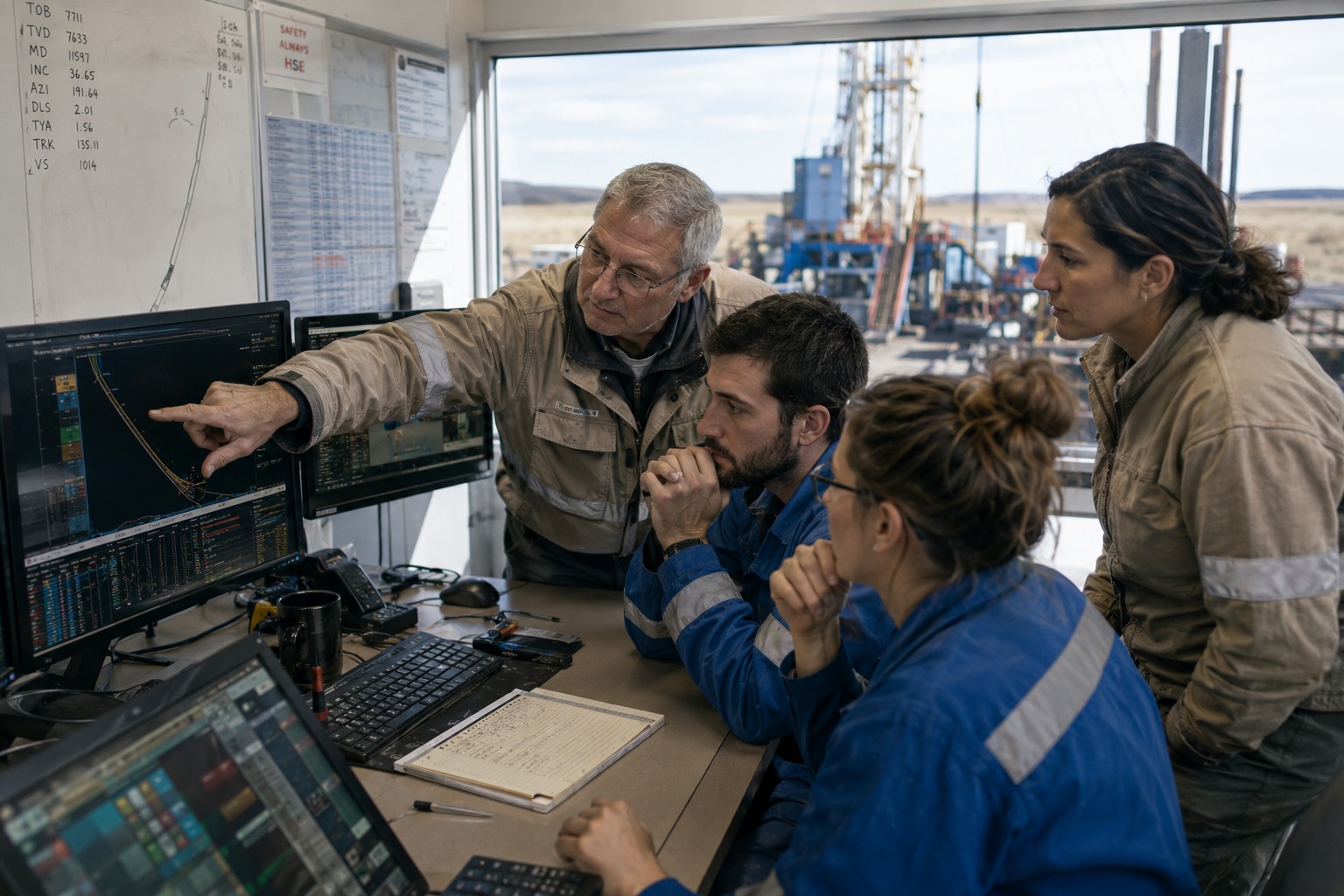
The geoscience community is facing a pivotal moment. As demand grows for expertise in energy, critical minerals, water, hazard resilience, infrastructure, and environmental decision-making, the geoscience enterprise is being asked to do more than ever. But meeting that demand will depend on a strong, adaptable, and well-supported workforce.
That is why AGI is launching Geoscience Enterprise ARC (Attraction, Retention, and Capability), a new initiative designed to help strengthen the geoscience workforce pipeline and support the long-term health of the geoscience enterprise. Geoscience Enterprise ARC is built around the simple yet urgent idea that the challenges facing the geoscience workforce cannot be solved through short-term, disconnected efforts alone. Across the profession, geoscience leaders are grappling with uneven student enrollment and graduation rates, limited awareness of geoscience careers, gaps between education and workforce expectations, and the rapid pace of change in technology, data, and professional practice. These pressures have been building for years, and they call for a coordinated, sustained response.
ARC, a major component of AGI’s Geoscience Enterprise Rising framework, is AGI’s answer to this challenge. The initiative focuses on three connected priorities. Attraction is about increasing awareness of geoscience and expanding the many pathways into the profession. Retention focuses on helping students and early-career professionals stay engaged as they move through education, training, and into the workforce. Capability is aimed at ensuring new entrants are prepared for modern geoscience work, including the technical, digital, professional, and ethical skills needed in rapidly evolving fields.
ARC does not start from scratch but instead builds on years of AGI leadership, partnership, and impact across the geoscience enterprise. AGI has long supported geoscience workforce development through data and analysis, educational resources, public engagement, professional collaboration, and strategic initiatives. ARC is designed to connect and expand those strengths in a more intentional, enterprise-wide effort.
“Between declining student enrollment in traditional geologic curricula and a rapidly changing technical landscape, our profession is facing serious pressures,” said Deana Sneyd, Executive Director of the National Association of State Boards of Geology. “Short-term solutions and fragmented projects have proved to be ineffective in addressing this growing problem. That’s why a long-term effort like ARC is so necessary ― it stops treating recruitment and career development as separate issues and finally addresses the whole picture. Serving as a bridge between academia, industry, and professional organizations and societies, AGI is the natural fit to lead this effort. Thanks to established programs like Earth Science Week, K-12 outreach, and the groundwork laid by the Vision and Change ― The Future of Undergraduate Geoscience framework, the trust and infrastructure within the geoscience community already exist for AGI to ramp up quickly.”
Importantly, ARC reflects the reality that there is no single path into geoscience. Future geoscientists may come through universities, community colleges, apprenticeships, military service, skilled trades, career changes, or entrepreneurial pathways. By supporting attraction, retention, and capability across that full landscape, ARC aims to help the geoscience enterprise become more resilient, more inclusive, and better prepared for the future.
“Coordinated efforts such as ARC are critical to support geoscience workforce needs in the United States and are ideal to respond to this moment in our discipline,” said Bradley Cramer, Professor, School of Earth, Environment, and Sustainability at the University of Iowa. “The workforce landscape, the research landscape, and the higher education landscape are all changing at an unprecedented pace, and coordinated solutions developed through partnerships between industry, academia, and professional societies are essential to chart the path forward. AGI is the clear global leader in providing geoscience workforce and higher education curricular outcomes data. As the federation of geoscience societies spanning of breadth of our discipline ― from geodesy and geophysics to geography to soil science, and with a deep history connected to the professional working geoscience societies ― it is the only organization strategically positioned to develop the partnerships between industry and academia needed to accomplish these goals.”
ARC is designed to be collaborative at its core. Its success will depend on active partnership from across the geoscience enterprise, including industry, academia, professional societies, agencies, educators, and philanthropic supporters alike. Geoscience Enterprise ARC is an open invitation to work together, build on what is already strong, and create a more connected, capable, and future-ready geoscience community. In a time of real challenge ― and real opportunity ― AGI is helping lead the way.
Explore online to learn more about Geoscience Enterprise ARC and additional components of AGI’s Geoscience Enterprise Rising framework. To discuss how your organization can support and benefit from these efforts, contact AGI Geoscience Profession and Higher Education Director Christopher Keane.
New From AGI
- Place your advance order for the 2026 Earth Science Week (ESW) Toolkit, a key part of the annual ESW celebration (October 11-17), which this year focuses on the theme “Critical Minerals for a Thriving .” See the AGI Store for past ESW Toolkits, poster sets, and additional educational materials.
- Explore the new Directory of Geoscience Departments (DGD), now available as a web-based application. AGI’s DGD app provides the most complete, searchable resource of geoscience programs worldwide, covering over 1,900 departments around the world, including information on individual faculty, such as research interests and contact details.
- Check out the new Geoscience PolicyApp, a powerful, free online tool designed by AGI to help users easily monitor policy developments across the United States and European Union that impact the geoscience enterprise.
- See Economic Analysis of the Costs and Benefits of Geological Mapping in the United States of America from 1994 to 2019, a groundbreaking report that provides an in-depth economic assessment of geological mapping, illuminating the significant return on investment and critical benefits for industry, government, and society.
- Improve policy engagement with Critical Needs: Geosciences Meeting the Needs of the Nation, a six-part document series by AGI and its federation of geoscience member societies that shows how geoscience can support solutions for our nation’s most urgent challenges in economic growth, infrastructure resilience, technological innovation, national security, public safety, and global leadership.
- Monthly geoscience employment data, including updates from the U.S. Census Bureau and U.S. Bureau of Labor Statistics’ Current Population Survey, can be accessed from AGI’s Profession Data dashboard.
- View a recording of the “Energy Resources for Our Future” Webinar Series, originally broadcast during Earth Science Week 2025, which explores topics including how to incorporate energy science into education, challenges and opportunities associated with geothermal energy, energy exploration and educational applications, and geologic mapping and modeling.
- AGI’s GRANDE (Geoscience Program Adaptation to Natural Disruptive Events) study has released a wealth of data and results as well as a final report of this multi-year effort to identify established best practices for geoscience academic departments relative to disruptive natural events.
- U.S.-based members of AGI Member Societies can access free training in geoscience communication through this Practical Geocommunication course, thanks to generous support from the American Association of Petroleum Geologists Foundation and the Society of Exploration Geophysicists.
- Webinars hosted by AGI, available for viewing live and on demand, focus on issues essential to the geoscience profession. Recent webinars include “Mission and Integrity in Higher Education: Understanding Today’s Environment,” “Solar Energy and the Minerals Behind It,” and “Transforming Field Culture: Insights from the ADVANCEing Field Safety Program.”
Geoscience Event Calendar
Explore the online resource designed to help you promote and track events sponsored by geoscience organizations of the AGI Federation: AGI’s Geoscience Event Calendar.
The calendar, available to view for free by anyone, helps conference organizers:
- Avoid scheduling conflicts and promote collaboration.
- Improve allocation of resources ― such as venues, speakers, and volunteers ― by determining when other societies have scheduled events.
- Increase member engagement, as societies can cross-promote each other’s events.
- Provide consistent communication about events with a single source of accurate event information, ensuring that all societies can share and be aware of event details.
- Foster long-term planning of events well in advance, making it easier to secure preferred dates and venues.
Posting events on the calendar is an exclusive benefit of membership in the AGI Federation. Simply contact AGI Communications’ Geoff Camphire at gac@americangeosciences.org for your society’s authorization code to submit an event on the Geoscience Event Calendar.
Subscribe or Unsubscribe
To receive AGI Connections alerts by email, subscribe now. Unsubscribe at any time. Forward and share with a friend or colleague!